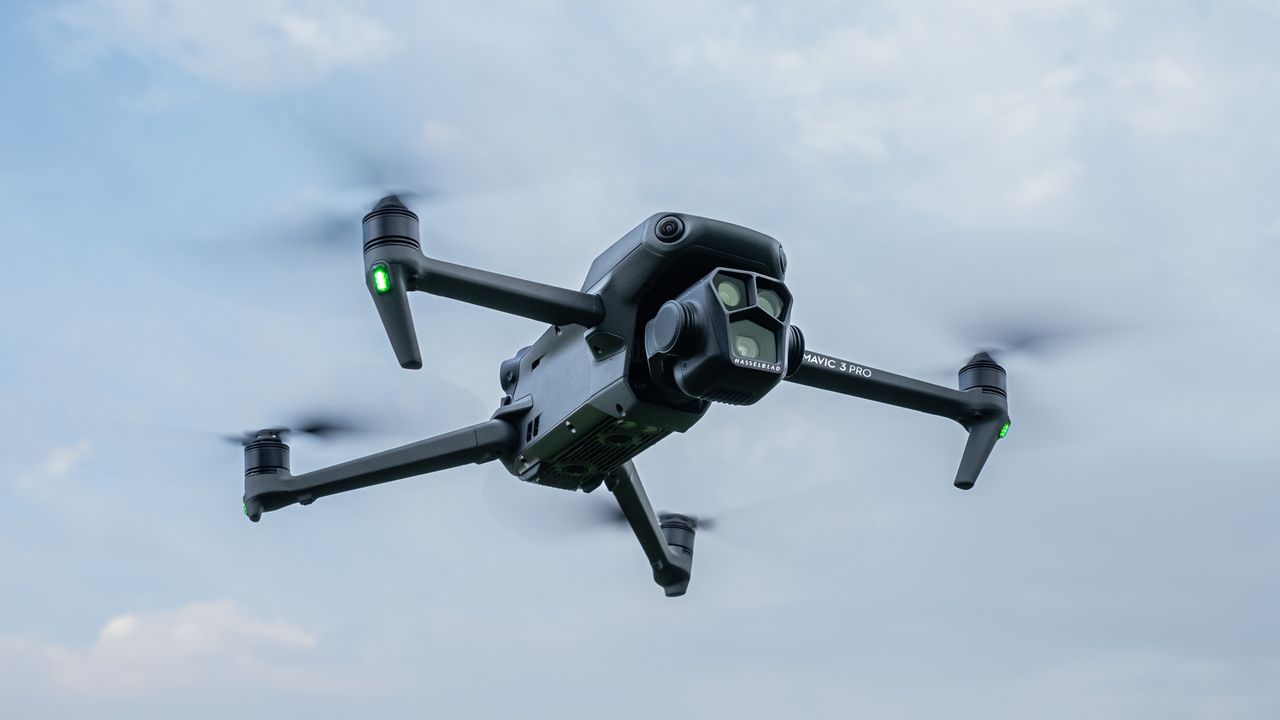
Drone firm PDW lands $820 million Pentagon funding to build the next generation of UAS components as crackdown on foreign providers continues
Pentagon backs $820 million expansion of domestic drone component manufacturing capacity PDW plans to expand its Huntsville facility for military drone production Funding will increase production of propulsion, power, and vision systems The Pentagon has conditionally committed up to $820 million to
<![CDATA[ <article> <ul><li><strong>Pentagon backs $820 million expansion of domestic drone component manufacturing capacity</strong></li><li><strong>PDW plans to expand its Huntsville facility for military drone production</strong></li><li><strong>Funding will increase production of propulsion, power, and vision systems</strong></li></ul><p>The Pentagon has conditionally committed up to $820 million to Performance Drone Works (PDW) for expanding domestic UAS component manufacturing capacity.</p><p>The financing is meant to expand domestic manufacturing of critical unmanned aerial system components across several distinct product and technology categories.</p><p>PDW will have to expand manufacturing at its 90,000-square-foot facility in Huntsville, Alabama, while additional production will involve local industry partners.</p><h2 id="components-for-smaller-military-drones">Components for smaller military drones</h2><p>The production will cover Group 1 and Group 2 UAS platforms, representing relatively lightweight systems used for lower-altitude military operations.</p><p>Under US military classifications, Group 1 drones weigh less than 20 pounds and operate at service ceilings of up to 1,200 feet.</p><p>Group 2 systems weigh no more than 55 pounds and operate below 3,500 feet under the Pentagon's established classification framework.</p><p>The funding, therefore, concerns components that support smaller aircraft rather than larger unmanned systems used for longer-range military missions.</p><p>Combined with private capital, the commitment is expected to increase production of propulsion systems, power controls, and vision technologies for military applications.</p><p>Before financing becomes final, PDW must satisfy financial, legal, and technical requirements under the federal lending process, set by the Department of Defense.</p><h2 id="pentagon-tightens-controls-on-foreign-drone-components">Pentagon tightens controls on foreign drone components</h2><p>The Pentagon is seeking to reduce dependence on overseas sources as concerns grow over foreign components entering critical military drone supply chains.</p><p>The effort follows an executive order issued last year supporting expanded US manufacturing for next-generation tactical autonomous systems.</p><p>“Achieving Secretary Hegseth’s mandate for drone dominance requires a secure and resilient industrial base here at home,” said Emil Michael, US Under Secretary of Defense for Research and Engineering.</p><p>The Office of Strategic Capital's commitment therefore supports broader efforts to increase domestic capacity for components considered important to national defense.</p><p>“America’s ability to respond tomorrow depends on the industrial capacity we build today,” said James Slider, CEO of PDW.</p><p>“This conditional commitment … would support the critical need of strengthening domestic manufacturing and restoring America’s ability to build the capabilities our nation depends on.”</p><p>That urgency around domestic sourcing is not just theoretical: a recent incident in the U.K. showed what can go wrong when foreign components slip into military hardware unnoticed.</p><p>The U.K. Navy recently discovered its K3 Scout surveillance <a href="https://www.techradar.com/cameras/drones/best-drone">drones</a> sent “heartbeat communications” to China.</p><p>Though the U.K. swiftly disconnected the drones from the internet after discovering the communications, the incident raised concerns about foreign-made equipment operating in sensitive military environments.</p><p>“If we cannot say with confidence what is inside our own military equipment, we cannot say it is ours, or that we are sovereign,” said Alicia Kearns, the UK Shadow Minister for National Security and Safeguarding</p><p>“When cameras built on Chinese parts are found recording our special forces – their faces, training and operations – we should not be surprised, we should be furious that we still haven’t woken up to the realities of the threat we face.”</p><p>Via <a href="https://dronefront.com/pentagon-drone-component-pdw/" target="_blank" rel="nofollow">The DroneFront</a></p><figure class="van-image-figure inline-layout" data-bordeaux-image-check ><div class='image-full-width-wrapper'><div class='image-widthsetter' style="max-width:676px;"><p class="vanilla-image-block" style="padding-top:31.51%;"><img id="diM9tpwF2Lz85R8q85CT78" name="tr-g_news" alt="Google logo on a black background next to text reading 'Click to follow TechRadar'" src="https://cdn.mos.cms.futurecdn.net/diM9tpwF2Lz85R8q85CT78.jpg" mos="" align="middle" fullscreen="" width="676" height="213" attribution="" endorsement="" class="inline"></p></div></div></figure> </article> ]]>
Read the full article on TechRadar
Read Full Article →