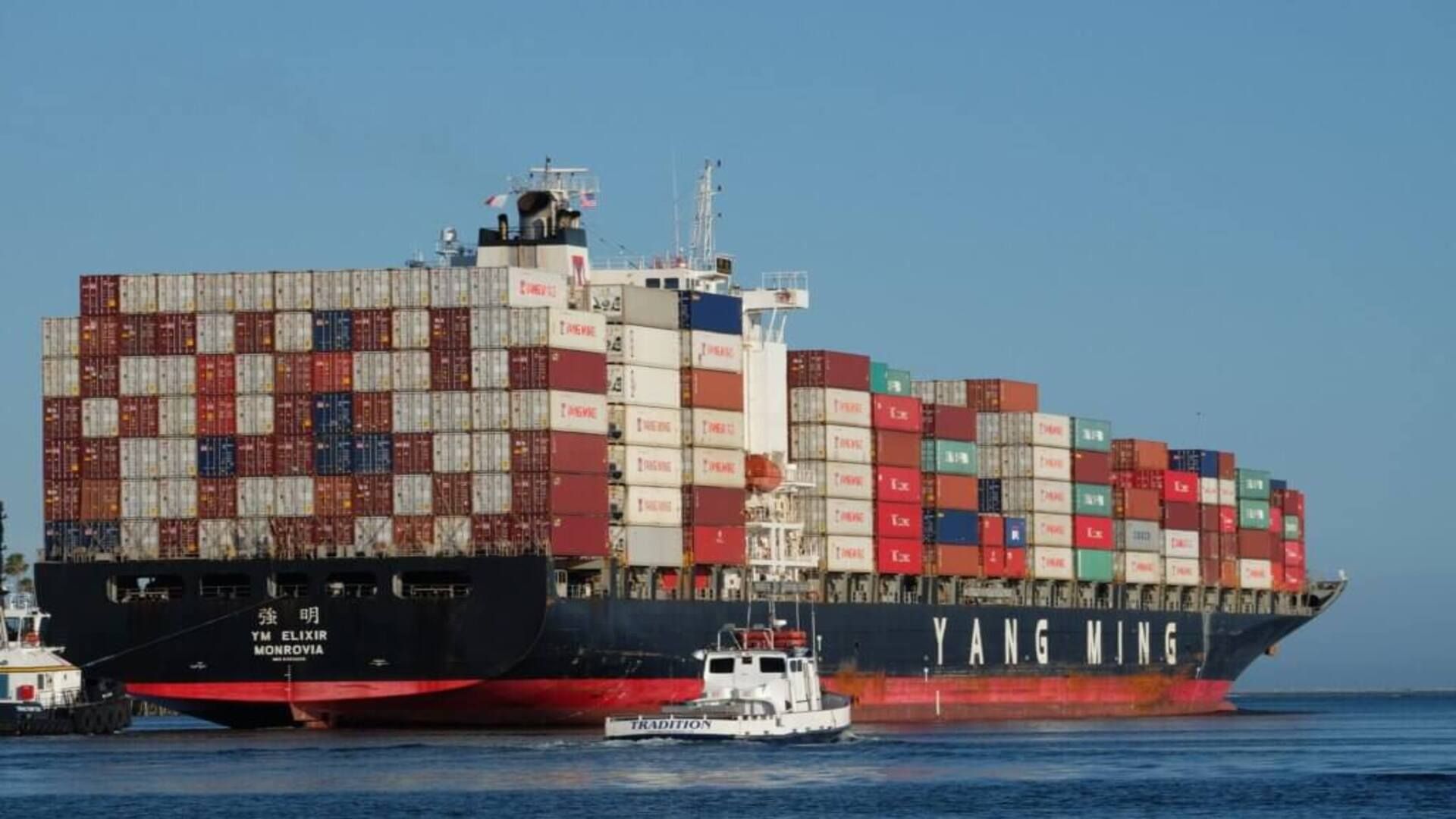
'It almost started a war': US Army nearly boarded a Chinese ship after receiving an "entirely false" AI-hallucinated intelligence report saying it had nuclear arms on board
A chatbot invented entirely false cargo details about a Chinese vessel Armed troops prepared to board the ship before anyone checked the source Military aircraft were already active when officials caught the error A false intelligence assessment nearly triggered a US military invasion of a Chinese v
<![CDATA[ <article> <ul><li><strong>A chatbot invented entirely false cargo details about a Chinese vessel</strong></li><li><strong>Armed troops prepared to board the ship before anyone checked the source</strong></li><li><strong>Military aircraft were already active when officials caught the error</strong></li></ul><p>A false intelligence assessment nearly triggered a US military invasion of a Chinese vessel after AI-assisted analysis wrongly identified its cargo.</p><p>The report circulated during the Iran conflict and prompted preparations to intercept the vessel before officials discovered serious problems with its underlying information.</p><p>Sources told <a href="https://edition.cnn.com/2026/09/18/politics/us-military-ai-false-intelligence-china-ship" target="_blank" rel="nofollow">CNN</a> that armed personnel were preparing to board while military aircraft supported preparations, creating a potentially dangerous confrontation between major powers.</p><h2 id="ai-assisted-analysis-produced-the-mistaken-assessment">AI-assisted analysis produced the mistaken assessment</h2><p>The episode began when an analyst examined intelligence concerning the ship's manifest and used a chatbot to interpret information.</p><p>Sources said the system combined publicly available material with classified signals information before producing an incorrect assessment about the vessel's cargo.</p><p>The analyst subsequently used AI again to prepare the findings in a standard intelligence format that was distributed among military officials.</p><p>Officials only examined the underlying information shortly before the planned operation, revealing that the reported cargo identification was wrong.</p><p>The source described the assessment as “entirely false,” while CNN reported that another source said it “almost started a war.”</p><p>The exact material that the chatbot misidentified has not been disclosed publicly, leaving important details about the original error unavailable.</p><p>The Pentagon and the military command responsible for Pacific special operations did not provide comments on the incident.</p><p>The episode comes as the US military expands its use of <a href="https://www.techradar.com/best/best-ai-tools">AI tools</a> across intelligence, operations, administration, and battlefield decision-making.</p><p>In January, Defense Secretary Pete Hegseth announced an AI strategy intended to accelerate deployment across military missions and organizational functions.</p><p>“We will unleash experimentation, eliminate bureaucratic barriers, focus our investments and demonstrate the execution approach needed to ensure we lead in military AI,” Hegseth said.</p><p>The strategy includes programs for intelligence work, operational planning, enterprise functions, and wider access to generative AI systems.</p><p>The department later said more than 1.3 million personnel had used GenAI.mil, generating tens of millions of prompts within five months.</p><h2 id="the-incident-exposes-a-difficult-verification-problem">The incident exposes a difficult verification problem</h2><p>The reported mistake involved more than an inaccurate chatbot response because its output entered a process used for consequential military decisions.</p><p>Once incorrect information appeared in a formal assessment, officials receiving the document had to determine whether its underlying evidence supported the conclusion.</p><p>There is no information on which verification procedures were applied before the assessment reached personnel preparing the maritime operation.</p><p>It also remains unclear whether the analyst knew that the chatbot had introduced an incorrect interpretation before the report circulated.</p><p>According to CNN, different military organizations use different AI systems, while officials have described varying practices for checking information produced by them.</p><p>That fragmented environment makes it difficult to identify a single verification process governing every AI-assisted intelligence product across the military.</p><p>AI tools can make military analysis faster and easier, yet their potential for significant errors requires strict human verification before operational decisions.</p><p>That need becomes more important when intelligence concerns a rival country, where an incorrect assessment involving a military vessel could trigger retaliation.</p><p>A mistaken attack could then escalate tensions between the countries involved, potentially producing a wider armed confrontation or prolonged political and military conflict.</p><figure class="van-image-figure inline-layout" data-bordeaux-image-check ><div class='image-full-width-wrapper'><div class='image-widthsetter' style="max-width:676px;"><p class="vanilla-image-block" style="padding-top:31.51%;"><img id="diM9tpwF2Lz85R8q85CT78" name="tr-g_news" alt="Google logo on a black background next to text reading 'Click to follow TechRadar'" src="https://cdn.mos.cms.futurecdn.net/diM9tpwF2Lz85R8q85CT78-1920-80.jpg" mos="" align="middle" fullscreen="" width="676" height="213" attribution="" endorsement="" class="inline"></p></div></div></figure> </article> ]]>
Read the full article on TechRadar
Read Full Article →