Researchers build sailboat drone prototype that can 'fly' — we think it's more like falling with style
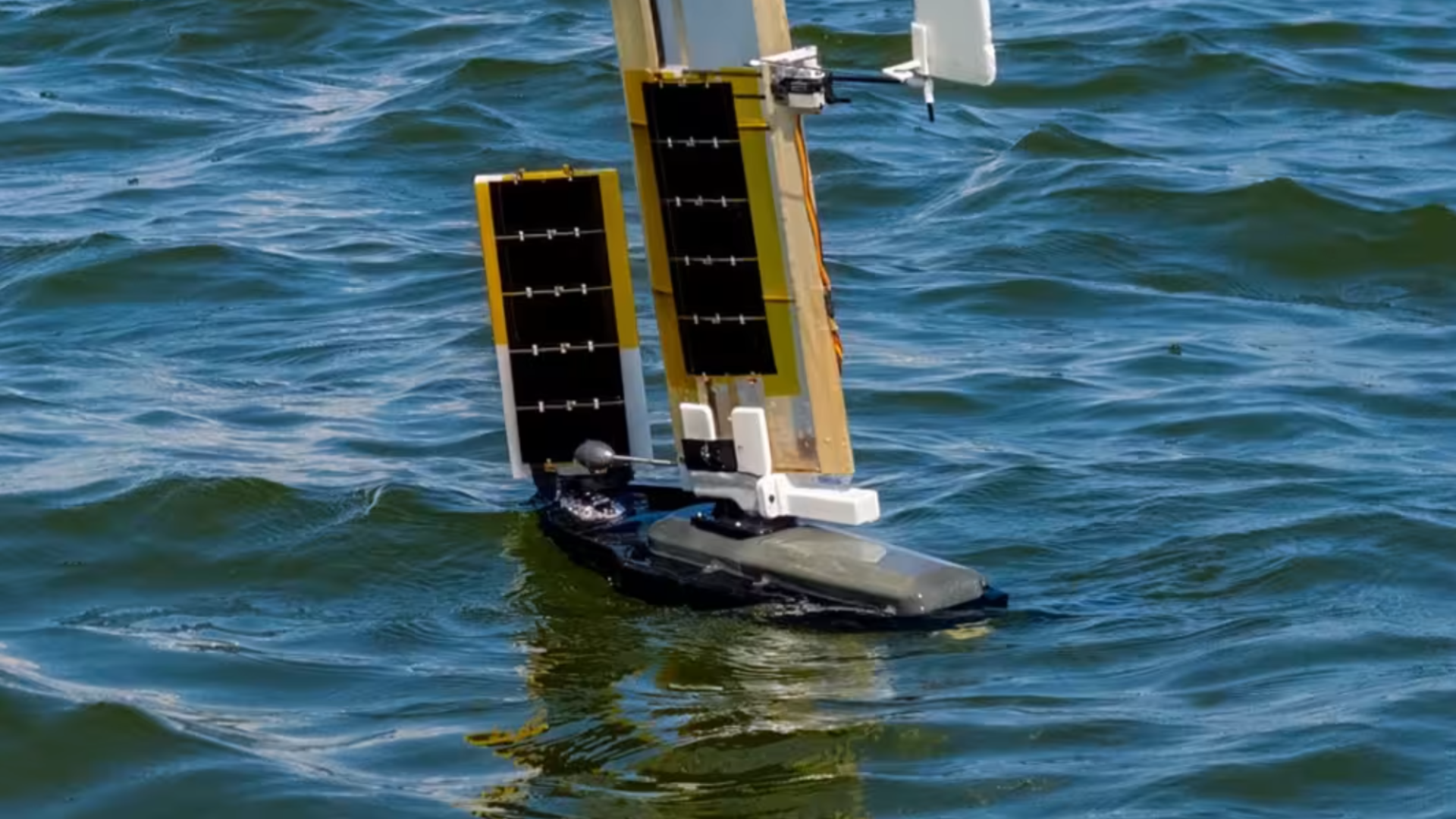
ALBATROSS turns an aircraft release into a controlled ocean landing system The 1.1 kg drone can deploy without carrying powered flight hardware Its rotating descent slows the fall before the vehicle reaches water ALBATROSS, a drone built by seven engineers at Singapore university SUTD, is a lightwei
<![CDATA[ <article> <ul><li><strong>ALBATROSS turns an aircraft release into a controlled ocean landing system</strong></li><li><strong>The 1.1 kg drone can deploy without carrying powered flight hardware</strong></li><li><strong>Its rotating descent slows the fall before the vehicle reaches water</strong></li></ul><p>ALBATROSS, a drone built by seven engineers at Singapore university SUTD, is a lightweight sailboat drone designed to reach the water successfully after an aerial release.</p><p>The 1.107 kg prototype rotates while descending, which slows its fall before landing, and then converts into a wind-propelled vessel.</p><p>Its unusual launch method gives the machine a claimed operating range above 100 km while avoiding powered flight during deployment.</p><h2 id="a-drone-that-drops-before-it-sails">A drone that drops before it sails</h2><p>ALBATROSS uses rigid wingsails to control its descent, causing the craft to rotate instead of dropping directly toward the water.</p><p>That spinning motion reduces falling speed and limits landing forces, allowing the vehicle to enter the ocean without landing hardware.</p><p>After landing on the water, the craft automatically returns to an upright position before switching into sailing mode.</p><p>“ALBATROSS is designed to be released from an aircraft or UAV, passively enter autorotation for a controlled, low-impact water landing, self-right without actuation,” said the SUTD research team.</p><p>The drone does not come with a landing gear, so it uses three control actuators with three main sensors, while a rudder provides directional movement through lateral motion for steering.</p><p>That rudder functions similarly to a fish tail, generating thrust while helping the small vessel steer after reaching the water.</p><h2 id="range-and-design-give-the-concept-its-edge">Range and design give the concept its edge</h2><p>The researchers say ALBATROSS could cover roughly above 100 km, substantially exceeding the approximately 7km range reported for SailMAV.</p><p>Its low mass allows aircraft or UAVs to carry it into areas where rapid deployment could matter during environmental events.</p><p>It also has an advantage over autonomous sailing platforms such as Saildrone or Sailbuoy, which may require external support during some operations.</p><p>That edge comes from its design, which integrates aerial and aquatic functions without relying on the separate mechanisms typically needed to manage those modes.</p><p>"Unlike many hybrid aerial-marine systems, ALBATROSS eliminates the need for aerial propulsion, complex mechanical reconfiguration, or active stabilization during the air-water transition and can sail back to shore at the end of a mission," the team said.</p><p>That ability could make aerial deployment useful for placing sensing equipment in areas where ocean conditions change quickly.</p><p>Wind-powered movement would then allow the vehicle to remain useful without carrying a propulsion system for continued surface travel.</p><p>This operating model differs from larger sailing <a href="https://www.techradar.com/cameras/drones/best-drone">drones</a>, which can require management from shore facilities or vessels during active missions.</p><p>The prototype therefore combines low mass with a descent mechanism intended to reduce hardware requirements during the transition into water.</p><p>Whether the concept works reliably outside controlled testing will depend on consistent descent, self-righting, steering, and sailing performance overall. </p><p>Via <a href="https://www.theregister.com/offbeat/2026/10/08/its-a-bird-its-a-planewell-more-of-a-spinning-parachute-but-really-its-a-droppable-robot-boat/5301788" target="_blank" rel="nofollow">The Register</a></p><figure class="van-image-figure inline-layout" data-bordeaux-image-check ><div class='image-full-width-wrapper'><div class='image-widthsetter' style="max-width:676px;"><p class="vanilla-image-block" style="padding-top:31.51%;"><img id="diM9tpwF2Lz85R8q85CT78" name="tr-g_news" alt="Google logo on a black background next to text reading 'Click to follow TechRadar'" src="https://cdn.mos.cms.futurecdn.net/diM9tpwF2Lz85R8q85CT78-1920-80.jpg" mos="" align="middle" fullscreen="" width="676" height="213" attribution="" endorsement="" class="inline"></p></div></div></figure> </article> ]]>
Read the full article on TechRadar
Read Full Article →