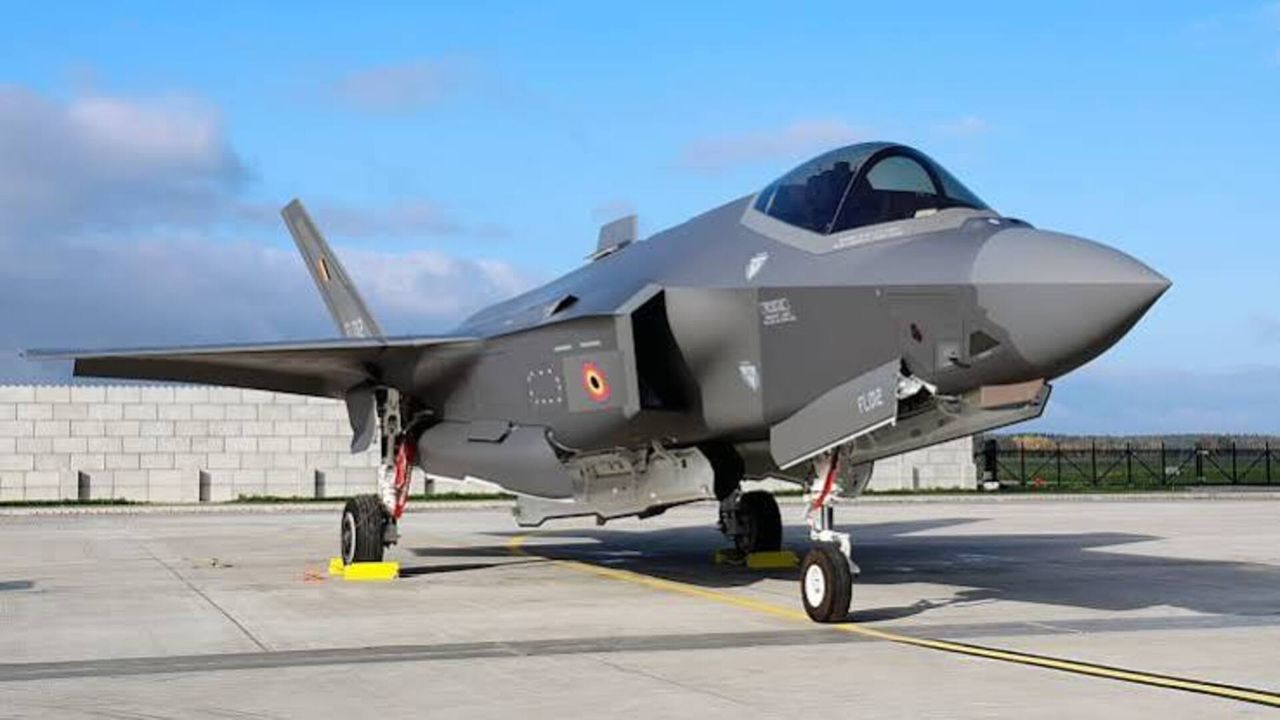
The US Air Force wants its next generation of target drones to mimic stealth jets
The Air Force wants drones spanning hobbyist toys to full stealth fighters Fighter-mimicking drones must fly past Mach 1.6 at high altitude Bomber-sized drones need matching radar, heat, and physical dimension signatures The US Air Force is seeking industry proposals for target drones capable of imi
<![CDATA[ <article> <ul><li><strong>The Air Force wants drones spanning hobbyist toys to full stealth fighters</strong></li><li><strong>Fighter-mimicking drones must fly past Mach 1.6 at high altitude</strong></li><li><strong>Bomber-sized drones need matching radar, heat, and physical dimension signatures</strong></li></ul><p>The US Air Force is seeking industry proposals for target drones capable of imitating threats from cheap commercial aircraft to stealth fighters.</p><p>A recent Request for Information issued by the service sets a deadline of September 28 2026 for companies to submit concepts.</p><p>The requested <a href="https://www.techradar.com/cameras/drones/best-drone">drone</a> series would span nearly every category of aerial threat, from small hobbyist-style platforms to heavy bombers.</p><h2 id="a-range-of-threats-in-one-series">A range of threats in one series</h2><p>The Air Force's request describes platforms that must stand in for cheap hobbyist drones on one end and advanced fifth-generation fighters or large multiengine aircraft on the other.</p><p>For supersonic fighter simulation, the request describes speeds beyond Mach 1.6 at roughly 40,000 feet, combined with sharp high-G maneuvering.</p><p>It also calls for tightly controlled radar signatures and layered infrared and radio-frequency emissions meant to resemble a genuine combat aircraft.</p><p>Systems meant to stand in for large drones would need to operate at altitudes near 50,000 feet, matching how high those aircraft actually fly.</p><p>Midsize platforms would need to fly at speeds between Mach 0.5 and 0.8 while making sharp, forceful turns similar to real fighters.</p><p>Smaller systems, meant to substitute for compact scout-class drones, would fly well under 150 knots and support coordinated swarm behaviour.</p><p>For aircraft the size of a C-130, engineers care less about raw performance and more about matching physical scale, subsonic handling, and propulsion behaviour.</p><p>That accuracy allows engineers to test how well a missile's guidance system and warhead would perform against a realistically sized aircraft.</p><h2 id="cost-and-history-shape-the-approach">Cost and history shape the approach</h2><p>The service is explicit that affordability matters as much as realism, describing a preference for systems cheap and simple enough to be treated as expendable when a test requires it.</p><p>Rather than relying solely on traditional defense contractors, the Air Force is inviting commercial, modified commercial, and dual-use proposals that might undercut the cost and complexity of older programs.</p><p>This approach follows nearly a century of remote-controlled target aircraft, stretching back to Britain's converted Tiger Moth trainers flown in the 1930s.</p><p>Since 2007, the Air Force has leaned on the BQM-167A, a subscale subsonic drone roughly 20 feet long, far smaller than a Chinese J-20 fighter or an H-6 bomber.</p><p>The service also operates the QF-16, a retired F-16 that has been converted to stand in as a full-scale fourth-generation threat aircraft.</p><p>Though it cannot convincingly replicate a modern stealth aircraft, it remains too costly to expend in large numbers.</p><p>After its recent military engagement in Iran, the U.S. has seen every reason to emphasize 'cheap' instead of 'performance.</p><p>In the war, the U.S. has <a href="https://www.techradar.com/pro/45-mq-9-reaper-drones-have-been-destroyed-in-the-iran-war-a-quarter-of-the-fleet-worth-usd1-3-billion-obliterated">lost approximately 45 MQ-9 Reaper drones</a> — about 25% of its fleet — costing over $1.3 billion, to a series of comparatively cheap Iranian drones and missiles.</p><p>So, while the U.S. may or may not be winning the physical war, it is certainly not happy with the financial implications of the victories or losses.</p><p>Whether the commercial industry can actually deliver stealthy, high-speed, expendable drones at the price point the Air Force wants remains an open question.</p><p>Via <a href="https://www.defensenews.com/industry/techwatch/2026/08/17/us-air-force-looks-to-acquire-target-drones-that-can-mimic-stealth-jets/" target="_blank" rel="nofollow">Defense News</a></p><figure class="van-image-figure inline-layout" data-bordeaux-image-check ><div class='image-full-width-wrapper'><div class='image-widthsetter' style="max-width:676px;"><p class="vanilla-image-block" style="padding-top:31.51%;"><img id="diM9tpwF2Lz85R8q85CT78" name="tr-g_news" alt="Google logo on a black background next to text reading 'Click to follow TechRadar'" src="https://cdn.mos.cms.futurecdn.net/diM9tpwF2Lz85R8q85CT78.jpg" mos="" align="middle" fullscreen="" width="676" height="213" attribution="" endorsement="" class="inline"></p></div></div></figure> </article> ]]>
Read the full article on TechRadar
Read Full Article →