This company wants to stop underwater drones and even submarines with a whole new form of sonar technology
Ultra Maritime pairs its Sea Spear passive sonar array with the AN/SSQ-125B active sonobuoy at the US Navy's Lanternfish 2026 exercise in a bid to detect underwater drones While neither sonar type is new, the distributed architecture that links both to Anduril's Seabed Sentry and the Navy's command
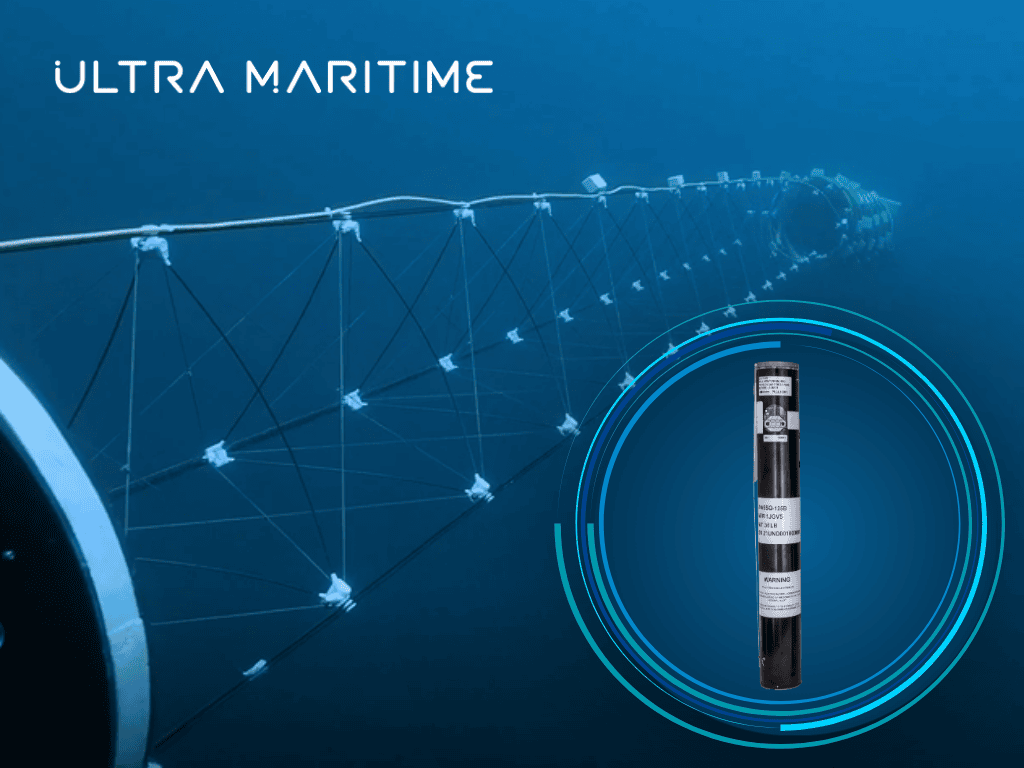
<![CDATA[ <article> <ul><li><strong>Ultra Maritime pairs its Sea Spear passive sonar array with the AN/SSQ-125B active sonobuoy at the US Navy's Lanternfish 2026 exercise in a bid to detect underwater drones</strong></li><li><strong>While neither sonar type is new, the distributed architecture that links both to Anduril's Seabed Sentry and the Navy's command systems generates usable, precise readings for unmanned underwater vehicles</strong></li><li><strong>The chain detects and then alerts operators to the presence of potential hostile naval assets in the vicinity of sensors that work in tandem to generate more reliable information</strong></li></ul><p>The threat that keeps modern navies awake at night is no longer a single, quiet submarine that gave regular defenses the slip, but a plethora of cheap drones that come in all shapes and sizes and could target anything from a pier to an undersea cable or a pipeline, for example.</p><p>While modern navies use sonar to track larger submarines, small drones are much harder to track reliably, even as Ultra Maritime, a defense tech company, says it has an answer.</p><p>The company showed that a pairing of its Sea Spear, a deployable passive sonar array, with the AN/SSQ-125B, its active sonobuoy offering, could, when working in tandem, track unmanned underwater vehicles (UUVs) better.</p><h2 id="existing-tech-paired-repurposed-and-integrated-to-deliver-results">Existing tech, paired, repurposed and integrated to deliver results</h2><p>It is important to know that neither of the hardware solutions used, passive sonar arrays or active sonobuoys, is a new creation; they have been deployed for years by the US Navy and many of its counterparts across the world since World War II to detect and track submarines.</p><p>The underlying approaches are even older: Passive listening and active pinging are two of the oldest techniques in the business, and both have existed since the First World War.</p><p>The intriguing part is the integration at play here and why it is tactically sound: Passive sonar is quiet, and it gives up nothing for the information it collects, including the listener's position, but it does get a bearing on any potential craft it does detect. Active sonar can then be used to determine range and location; however, for modern naval units, it is a double-edged sword, as it essentially announces one's presence in the region.</p><p>The tech essentially figures out whether anything is worth detecting by leveraging the first, then turns to the second to determine its specific location when needed. The company's <a href="https://umaritime.com/ultra-maritime-demonstrates-future-autonomous-counter-uuv-and-anti-submarine-warfare-detection/" target="_blank">Ocean of Things concept</a> extends that to a mesh of autonomous sensors seeded from crewed and uncrewed platforms.</p><p>Ultramarine's approach allowed it to detect and classify UUVs of various sizes and sophistication <a href="https://umaritime.com/ultra-maritime-successfully-demonstrates-counter-unmanned-undersea-vehicle-capability-at-u-s-navy-lanternfish-2026-exercise/" target="_blank">in the US Navy's 2026 Lanternfish exercise</a>. It has also announced that its Sea Spear is working with <a href="https://www.anduril.com/seabed-sentry" target="_blank">Anduril's Seabed Sentry</a> to detect the same.</p><p>The timing is excellent for its buyer: defense contractor Lockheed Martin recently <a href="https://www.adventinternational.com/news/cobham-ultra-an-advent-portfolio-company-agrees-to-sell-ultra-maritime-a-technology-led-undersea-warfare-solutions-provider-to-lockheed-martin/" target="_blank">agreed to purchase Ultra Maritime</a> from its private equity owner Advent for $3.45 billion, essentially adding it to the former's Rotary and Mission Systems division.</p><p>With navies struggling to identify and stop underwater drones that pose a persistent threat to their operations and defensive capabilities, Ultra Maritime's two-pronged approach seems like an interesting play to adopt. It combines already-existing scalable seabed infrastructure with a mesh of cheap listening arrays and expendable pinging buoys to get the job done.</p> </article> ]]>
Read the full article on TechRadar
Read Full Article →